Introduction: Avian Treasures of the Delta
The Mobile-Tensaw Delta serves as a critical habitat for over 300 bird species, making it one of the most important avian conservation areas in North America. This remarkable diversity stems from the delta's variety of habitats—from open water and marshes to bottomland forests and pine savannas—as well as its strategic location along the Mississippi Flyway, one of the continent's major bird migration routes. For bird enthusiasts and conservationists alike, the delta represents an extraordinary opportunity to observe and protect a wide range of species, from iconic wading birds to elusive forest dwellers.
This section explores the rich avian diversity of the Mobile-Tensaw Delta, examining the ecological roles of key bird species, the conservation challenges they face, and the efforts underway to ensure their long-term survival. By understanding the importance of birds in this ecosystem, we can better appreciate the need to protect the delta's habitats and the remarkable creatures that depend on them.
Wading Birds: Icons of the Wetlands
The shallow waters and abundant food resources of the Mobile-Tensaw Delta support a remarkable diversity of wading birds, from herons and egrets to ibises and spoonbills. These long-legged birds have become iconic symbols of the delta's wetland ecosystems.
Little Blue Heron (Egretta caerulea)
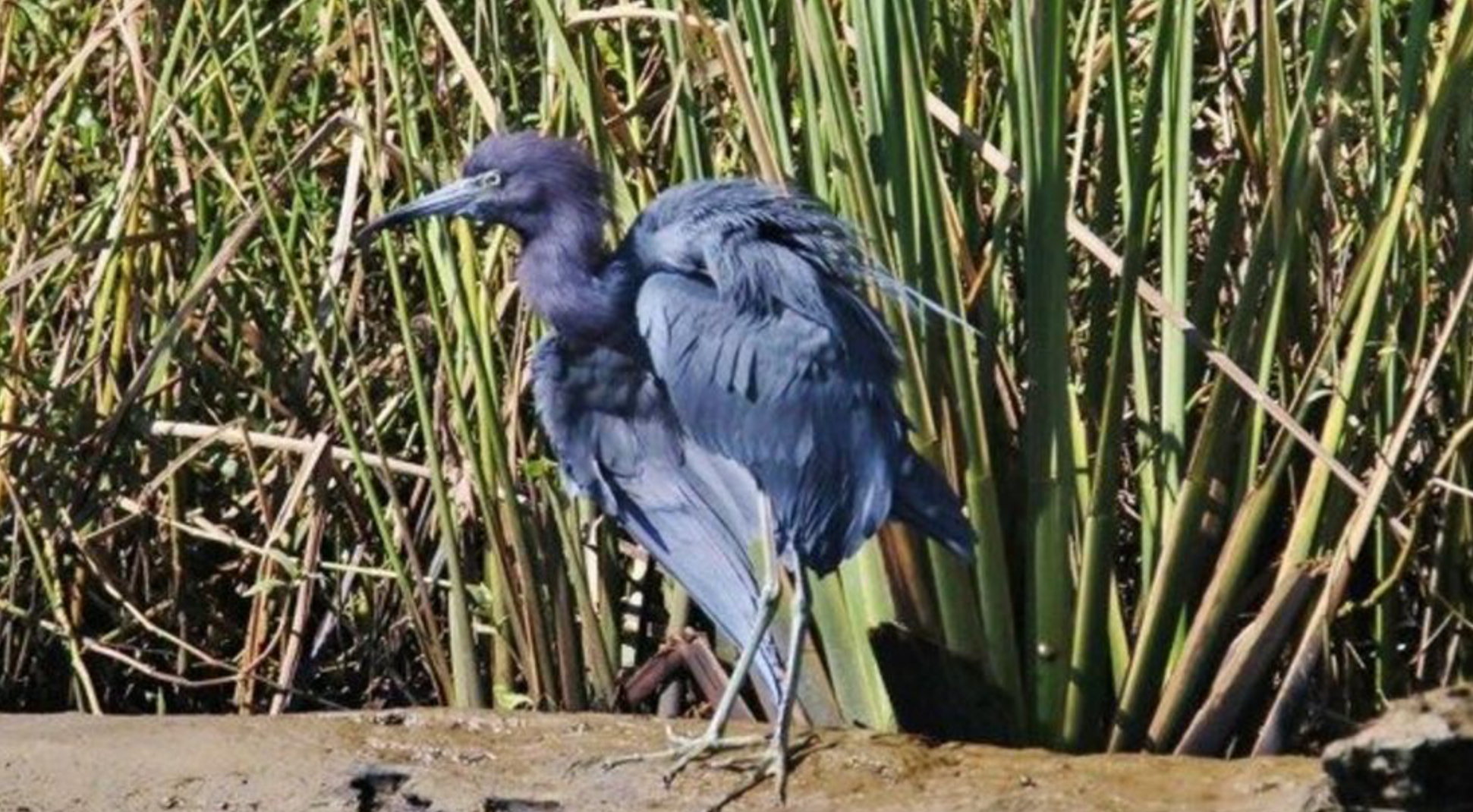
A little blue heron (Egretta caerulea) hunting among marsh grasses. These medium-sized wading birds feed primarily on small fish, amphibians, and aquatic invertebrates in the shallow waters of the delta. Young little blue herons are actually white, gradually changing to the slate-blue adult plumage during their first year, an adaptation that may help them feed more successfully among groups of white egrets.
The little blue heron is a medium-sized wading bird that inhabits the marshes, swamps, and shallow waters of the Mobile-Tensaw Delta. Adults display a distinctive slate-blue plumage with a purplish head and neck, while juveniles are entirely white—a characteristic that may help them feed more successfully among groups of white egrets. Little blue herons feed primarily on small fish, amphibians, and aquatic invertebrates, stalking their prey with slow, deliberate movements in shallow water.
Unlike many other wading birds, little blue herons often forage in densely vegetated areas rather than open water, using their slender bills to probe among aquatic plants for hidden prey. They typically nest in mixed-species colonies, building stick nests in trees or shrubs over water. While not currently listed as threatened or endangered, little blue heron populations have experienced declines in some areas due to wetland loss and degradation.
Wood Stork (Mycteria americana)
The wood stork, federally listed as threatened, is North America's only native stork species. These large, distinctive birds stand nearly 4 feet tall with wingspans exceeding 5 feet. They are characterized by their bare, scaly heads, thick, downward-curved bills, and black and white plumage. Wood storks were once common throughout the southeastern United States but experienced dramatic population declines in the mid-20th century due to wetland drainage and alteration of natural hydrological cycles.
Wood storks employ a unique feeding technique called tactolocation, wading through shallow water with their bills partially open. When their sensitive bills detect prey—typically small fish—they snap them shut with remarkable speed, one of the fastest reflex actions known among vertebrates. This technique allows them to feed effectively in turbid water where visual hunting would be difficult.
The Mobile-Tensaw Delta serves as important foraging habitat for wood storks, particularly during the post-breeding dispersal period when birds from Florida colonies move northward. Conservation efforts focused on protecting and restoring wetland habitats have helped wood stork populations begin to recover in recent decades, though they remain vulnerable to habitat loss and altered hydrology.
Roseate Spoonbill (Platalea ajaja)
The roseate spoonbill is perhaps the most visually striking wading bird found in the Mobile-Tensaw Delta. With their bright pink plumage, red eye rings, and distinctive spoon-shaped bills, these birds create a spectacular sight when feeding in the delta's shallow waters. Once heavily hunted for their beautiful feathers, roseate spoonbills have recovered from near-extinction in the early 20th century but remain uncommon in Alabama.
Roseate spoonbills feed by sweeping their specialized bills from side to side through shallow water, using sensitive receptors to detect prey items such as small fish, crustaceans, and aquatic insects. Their pink coloration comes from carotenoid pigments in their diet, particularly those found in crustaceans. Spoonbills typically nest in mixed colonies with other wading birds, building stick nests in mangroves or other trees over water.
In recent years, roseate spoonbills have been expanding their range northward along the Gulf Coast, with increasing observations in the Mobile-Tensaw Delta. This range expansion may be related to climate change, habitat restoration efforts, or a combination of factors. For birdwatchers in the delta, spotting a roseate spoonbill represents a special treat and a testament to the ecosystem's health and diversity.
Raptors: Aerial Predators
The Mobile-Tensaw Delta supports a diverse community of raptors, from fish-eating specialists like ospreys and bald eagles to forest hunters like red-shouldered hawks and barred owls. These birds of prey play crucial roles in the ecosystem as top predators, helping to regulate populations of fish, small mammals, and other prey species.
Bald Eagle (Haliaeetus leucocephalus)
The bald eagle, America's national bird, has made a remarkable recovery from near-extinction in the lower 48 states. These magnificent raptors, with their distinctive white heads and tails contrasting against dark brown bodies, have become increasingly common in the Mobile-Tensaw Delta in recent decades. Adult bald eagles have wingspans exceeding 7 feet and are among the largest birds of prey in North America.
Bald eagles in the delta primarily feed on fish, either catching them directly or scavenging dead or dying individuals. They also prey on waterfowl and small mammals when the opportunity arises. Eagles typically build massive stick nests in tall trees with good visibility of surrounding areas, often using the same nest for many years and adding to it annually. These nests can reach weights exceeding a ton and diameters of 8 feet or more.
The recovery of bald eagle populations represents one of America's greatest conservation success stories. Once decimated by habitat loss, hunting, and the effects of DDT (which caused eggshell thinning), bald eagles have rebounded following protection under the Endangered Species Act, the banning of DDT, and extensive conservation efforts. The Mobile-Tensaw Delta now supports numerous breeding pairs, with additional birds arriving during winter months.
Osprey (Pandion haliaetus)
The osprey, often called the "fish hawk," is a specialized raptor adapted for catching and eating fish. These medium-sized birds of prey have dark brown upperparts, white underparts, and distinctive dark eye stripes. Their feet feature specialized adaptations for catching slippery prey, including reversible outer toes and spiny footpads that help grip fish.
Ospreys are common throughout the Mobile-Tensaw Delta, where they can be observed hovering over water before plunging feet-first to catch fish near the surface. They typically consume their prey at favorite perches or carry it to their nests, always positioning the fish head-first for aerodynamic efficiency during flight. Ospreys build large stick nests on dead trees, artificial platforms, or occasionally human structures like channel markers.
Like bald eagles, ospreys experienced significant population declines due to DDT contamination but have recovered strongly following conservation efforts. The Mobile-Tensaw Delta now supports a healthy breeding population, with additional migrants passing through during spring and fall. Artificial nesting platforms installed throughout the delta have helped compensate for the loss of natural nesting sites and have contributed to osprey recovery.
Swallow-tailed Kite (Elanoides forficatus)
The swallow-tailed kite is perhaps the most graceful raptor found in the Mobile-Tensaw Delta. These striking birds are characterized by their deeply forked tails, black and white plumage, and extraordinary aerial agility. Watching a swallow-tailed kite in flight—effortlessly gliding, turning, and swooping with minimal wingbeats—is one of the great wildlife spectacles of the southeastern United States.
Swallow-tailed kites feed primarily on flying insects, small reptiles, amphibians, and occasionally nestling birds, which they capture and consume on the wing. They nest in tall trees, typically in the upper branches of the tallest trees available in bottomland forests or swamps. The Mobile-Tensaw Delta represents important breeding habitat for this species, which has experienced significant range contractions over the past century.
Once common throughout much of the southeastern United States, swallow-tailed kites now breed only in a limited area from South Carolina to Texas, with the core of their breeding range in Florida. Habitat loss, particularly the clearing of bottomland hardwood forests, has been the primary factor in their decline. Conservation efforts focused on protecting and restoring mature bottomland forests are essential for ensuring the long-term survival of this magnificent raptor in the Mobile-Tensaw Delta.
Songbirds: Voices of the Forest
The bottomland hardwood forests and other terrestrial habitats of the Mobile-Tensaw Delta support a remarkable diversity of songbirds, from year-round residents to seasonal migrants. These small to medium-sized birds fill the delta with their songs, particularly during spring breeding season, and play crucial roles in ecosystem processes such as insect control and seed dispersal.
Prothonotary Warbler (Protonotaria citrea)
The prothonotary warbler, often called the "swamp canary" for its brilliant yellow plumage and melodious song, is one of the most characteristic birds of the Mobile-Tensaw Delta's bottomland forests. Unlike most warblers, which nest in trees or shrubs, prothonotary warblers are cavity nesters, typically using abandoned woodpecker holes or natural cavities in trees standing in or near water.
These striking birds feed primarily on insects, spiders, and small snails, foraging in low vegetation and along the trunks and branches of trees in flooded forests. Their population has declined significantly in recent decades due to the loss and fragmentation of bottomland hardwood forests throughout their range. The Mobile-Tensaw Delta represents one of the most important remaining strongholds for this species, highlighting the conservation value of the delta's mature forested wetlands.
Swainson's Warbler (Limnothlypis swainsonii)
The Swainson's warbler is one of the most secretive and least-known birds of the southeastern United States. These plain brown warblers inhabit dense understory thickets in bottomland hardwood forests, where they forage on the ground by flipping over leaves with their bills to find hidden insects. Despite their unassuming appearance, Swainson's warblers produce a remarkable song—loud, ringing, and reminiscent of the Louisiana waterthrush.
Due to their skulking behavior and preference for dense habitat, Swainson's warblers are more often heard than seen, even by experienced birdwatchers. The Mobile-Tensaw Delta provides important habitat for this uncommon species, which has experienced population declines due to the loss and degradation of bottomland forests. Conservation efforts focused on maintaining the structural complexity of forest understories, including dense canebrakes, are essential for supporting Swainson's warbler populations.
Northern Parula (Setophaga americana)
The northern parula is a tiny, colorful warbler that inhabits the canopy of mature forests throughout the Mobile-Tensaw Delta. These birds are characterized by their bluish-gray upperparts, yellow throat and breast, and distinctive white eye crescents. Their buzzy, ascending trilled song is a common sound in the delta's forests during spring and summer.
Northern parulas have a unique nesting requirement: they typically build their nests in hanging clumps of Spanish moss (Tillandsia usneoides) or similar epiphytic plants. This specialized nesting behavior makes them particularly dependent on mature trees that support these epiphytes. The birds feed primarily on insects and spiders gleaned from foliage in the forest canopy.
While northern parulas remain relatively common throughout their range, they depend on healthy, mature forests with abundant epiphytes—a habitat type that has declined in many areas due to logging and development. The Mobile-Tensaw Delta, with its extensive tracts of mature bottomland forest draped in Spanish moss, provides ideal habitat for this charismatic warbler.
Bird Conservation in the Delta
The birds of the Mobile-Tensaw Delta face numerous conservation challenges, from habitat loss and fragmentation to climate change and pollution. Addressing these challenges requires coordinated efforts at multiple scales, from site-specific interventions to landscape-level planning.
Habitat Protection and Restoration
The protection and restoration of key habitats is essential for ensuring the long-term survival of the delta's bird diversity. This includes preserving large, connected tracts of bottomland hardwood forests, maintaining the hydrological processes that sustain wetlands, and restoring degraded habitats through techniques such as reforestation and invasive species control.
Several protected areas within the Mobile-Tensaw Delta, including the Mobile-Tensaw Delta Wildlife Management Area, Weeks Bay National Estuarine Research Reserve, and Blakeley State Park, provide important refuges for birds and other wildlife. Conservation organizations and government agencies are working to expand this network of protected lands through acquisitions and conservation easements.
Research and Monitoring
Ongoing research and monitoring efforts are crucial for understanding the status of bird populations in the Mobile-Tensaw Delta and for developing effective conservation strategies. Scientists use a variety of techniques to study birds, including point counts, mist netting, banding, and radio telemetry. These methods provide valuable information about bird abundance, distribution, habitat use, and responses to environmental changes.
Citizen science initiatives, such as the Audubon Christmas Bird Count and eBird, also play an important role in monitoring bird populations by engaging volunteers in collecting and reporting bird observations throughout the delta. These data help scientists track changes in bird distributions and abundances over time, providing early warnings of population declines and informing conservation actions.
Climate Change Adaptation
Climate change poses significant threats to the birds of the Mobile-Tensaw Delta, from sea level rise that may inundate coastal habitats to altered precipitation patterns that may affect food availability and nesting success. Conservation efforts must increasingly consider these threats and develop strategies to help birds adapt to changing conditions.
Potential adaptation strategies include protecting inland migration corridors that allow coastal species to move upslope as sea levels rise, maintaining and restoring habitat connectivity to facilitate range shifts, and identifying and protecting climate refugia—areas that may remain relatively stable despite regional climate changes. The extensive size and topographic diversity of the Mobile-Tensaw Delta may provide some buffering against climate impacts, highlighting the importance of preserving this remarkable ecosystem in its entirety.
Public Engagement and Education
Engaging the public in bird conservation is essential for building support for protection of the Mobile-Tensaw Delta and its avian inhabitants. Educational programs, birdwatching tours, and citizen science initiatives provide opportunities for people to connect with birds and develop an appreciation for their ecological importance and conservation needs.
Several organizations in the Mobile-Tensaw Delta region offer bird-focused educational programs and events, including the 5 Rivers Delta Resource Center, the Environmental Studies Center, and local Audubon chapters. These programs help foster a conservation ethic among residents and visitors alike, creating a constituency for bird conservation in the region.
By working together to address conservation challenges, we can ensure that the Mobile-Tensaw Delta continues to serve as a haven for birds and a source of inspiration and enjoyment for generations to come. The diverse avian community of America's Amazon represents a living legacy that deserves our protection and stewardship.